
For Families
Child Care Help for Families
Get referrals to local child care programs.
Assess the quality of programs near me.
Find financial assistance to supplement child care costs.
We help families find, evaluate and pay for child care services.
Child Care Referral Central (CCRC) is operated by Early Years and serves families across North Central and Eastern North Carolina.
Whether you’re looking for infant care, preschool, school-age care, or care that meets your family’s unique needs, our Referral Specialists are here to help. We provide free, personalized child care referrals, consumer education and guidance to help you make informed decisions about your child’s care.
Our team includes bilingual English-and Spanish-speaking Referral Specialists, and interpretation services are available to assist families in many other languages.
Free Child Care Referral Help and Educational Webinars for Families
Explore our free family webinars and seminars — get expert tips on preschool benefits, choosing the right care, locating infant options nearby and simplifying your search. Click here to learn more.
Child Care Availability and Costs in Your Community
Child care availability and costs vary across North Carolina. Explore county-level information about child care programs, average costs and local child care trends to help plan your search and budget.
Learn more about how CCRC helps families

Programs for Families

Child Care Resource and Referral (CCR&R)
Empowering families, providers, employers and communities with child care solutions.

Child Care Scholarship Program
We help families in Durham County and Orange County access affordable, high-quality child care through locally funded scholarships.

Durham PreK
High-quality, equitable pre-K for every 4-year-old in Durham County.
Featured Resource
Applying for 2026-2027 NC Pre-K
NC Pre-Kindergarten (NC Pre-K) is the state-funded, part-day preschool program designed to provide at-risk 4-year-old children with a quality early childhood education.
FAQS for Families
Early Years helps families with child care needs through a service called Child Care Referral Central (CCRC). Child Care Referral Specialists help take the guesswork out of choosing care by providing referrals to local programs, information on the NC Star Rated licensing system and information on where to get help paying for child care. We also offer Choosing Child Care Seminars in the community and provide consumer education through our Family Focus eNewsletter.
Child Care Referral Central is a regional collaborative between Early Years and the Alamance, Caswell, Person, and Franklin-Granville-Vance Partnerships for Children. Child Care Referral Central makes finding child care in the nine-county area of Alamance, Caswell, Durham, Franklin, Granville, Orange, Person, Vance, and Wake counties easy and central for families.
Watch this video to learn more about how child care resource and referral agencies help families.
A CCRC Referral Specialist will give you the tools to be confident through the child care search process. They will help you take the process one step at a time and share with you the information you’ll need to make the right child care choice.
Information will include:
- Types of child care options. You will receive a detailed printout, listing programs that are matched by criteria like quality ratings, type of care, location, tuition rates, vacancies, ability to meet a special need and more.
- North Carolina child care regulations
- Quality care indicators (checklists to take with you when you visit child care facilities & tips for checking references)
- Cost of care & financial assistance
- Developmentally appropriate classroom practices & positive teacher-child interactions
- Details of visits by the state licensing agency
The first eight years of life are some of the most important formative years. Brain Science research confirms that early experiences have a direct impact on how children develop learning skills and social-emotional abilities that stay with them throughout life.
Participating in a high-quality child care program can help your child
- build their Confidence. They get to practice new skills in a safe and nurturing environment.
- build Relationships and develop secure attachments. These relationships help children to better understand themselves in relation to others, as well as practice social skills like conflict resolution, taking turns and how to share. They have the opportunity to interact with children of a wide range of ages and personalities.
- feel that their contributions to the community are valued and encouraged. Early care and education settings often provide children the first opportunity outside of the home to have a voice and contribute their ideas.
- learn life skills such as problem-solving. Teachers can help children develop their inner strengths and critical thinking skills, which helps to express feelings, resolve conflicts, and take responsibility for their actions.
- develop language and communication skills. In quality child care programs, children are more likely to be exposed to large amounts of language and vocabulary through reading, singing and talking.
- increase emotional regulation. Consistent and nurturing interactions with a teacher can help children manage and experience emotions, feelings and behaviors, which are foundational to success in learning.
- develop empathy to understand how others feel in a particular situation and respond with care. Pretend play, reading stories about feelings, caring for animals or plants, having role models and compassionate teachers are all ways that children learn about empathy in child care settings.
- be Resilient. Quality programs provide stable, supportive environments and meaningful ways to stay connected that are keys to children being able to bounce back from a setback or pick themselves up from failure. Children have the opportunity to get out of their comfort zone and be vulnerable while feeling safe to try new things.
Watch this video clip to hear more about the importance of quality in child care.
North Carolina has licensing standards that serve as a baseline for health and safety as well as provide guidance regarding more comprehensive needs of young children. One of the keys to a high-quality program is what happens inside the classroom. Teachers engage and tailor learning opportunities for children based on their needs through responsive language, classroom activities and language-rich environments. Positive guidance is used to foster independence, prevent & redirect challenging behaviors.
During your observations at child care settings you should see teachers who are responsive to the needs of each child, supportive and engaging experiences for children, positive interactions between providers and children, learning opportunities that are developmentally appropriate, interactive and plentiful, and health, safety and welfare of children are priorities.
Watch this video clip to learn more about what you should see in quality preschools.
Begin by asking yourself a few questions.
Think about your child’s needs
- What is the temperament of my child?
- What kind of environment will help my child thrive?
- If you have a school-age child, what are her/his interests?
- Does my child have any special needs that should be considered?
Now, focus on your family’s needs
- How much care do I need? What days and hours?
- Does location of care play a key role in our decision? Do I want a child care facility close to my home or close to my work?
- What are our family’s budget considerations for care? Use this budgeting tool to examine how child care will impact your monthly budget.
- What is the typical cost of care in my county?
- Check out the NC Child Care Data Map to learn more about the cost of care in your area.
- What is the typical cost of care in my county?
For more information about child care in your county, check out these county-specific child care fact sheets.
- What types of financial resources may be available to help our family afford child care?
- Do the program’s philosophies reflect our family values?
- How will the child care provider involve me in the daily events of my child’s life?
- Do the hourly, holiday and vacation schedules meet my family’s needs?
Take your child with you when you visit. Visiting in the afternoon is best for talking to the director; visiting in the morning is best for observing teacher-child interactions.
- Observe all areas where the children are cared for, including outdoor areas. Be sure to visit the classroom your child will move into after aging up.
- Listen to how the teachers interact with the children.
- Ask your child if s/he liked visiting and does s/he think it would be fun to go there again.
News and Events for Families


Oct
21
Nov
12
Event
Choosing Quality Child Care Seminar
6:30 pm – 8:00 pm
WakeMed Women’s Pavilion 1900 Kildaire Farm Road, Cary, NC 27518, Conference Room B
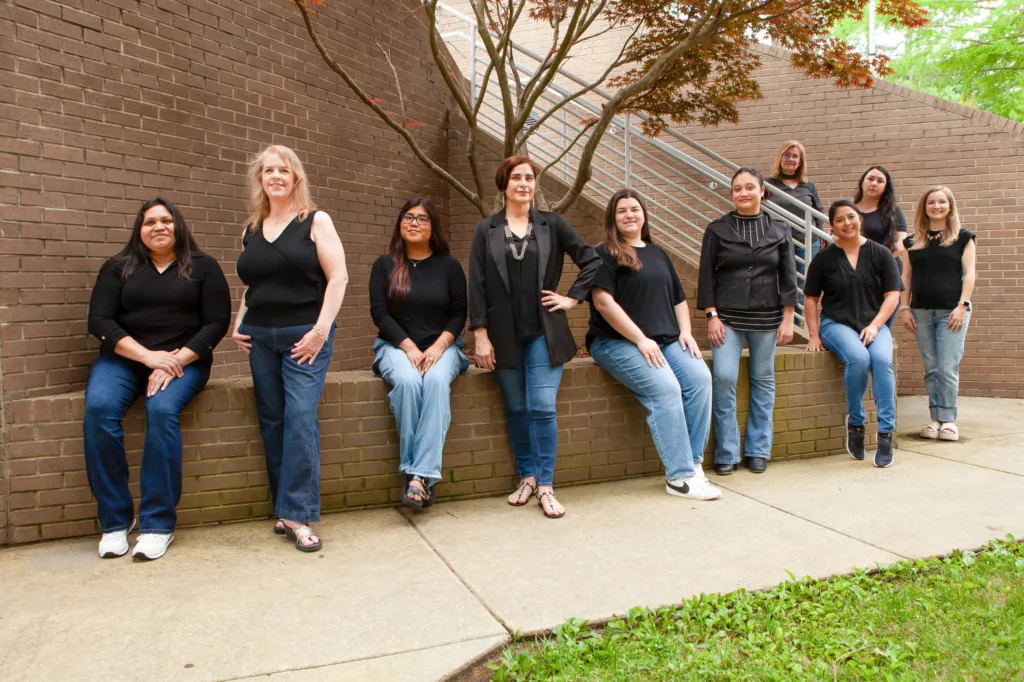
Meet the CCRC Team!
Get the Family Focus Newsletter
Stay up to date about information and resources on parenting and supporting your children’s development, quality child care and making the most of your family’s child care experience.


