
Blog
Blog
We Can Help Support Attachment in Birth-to-Three Early Childhood Classrooms
By Jennifer Anderson, Birth-to-Three Professional Development Manager
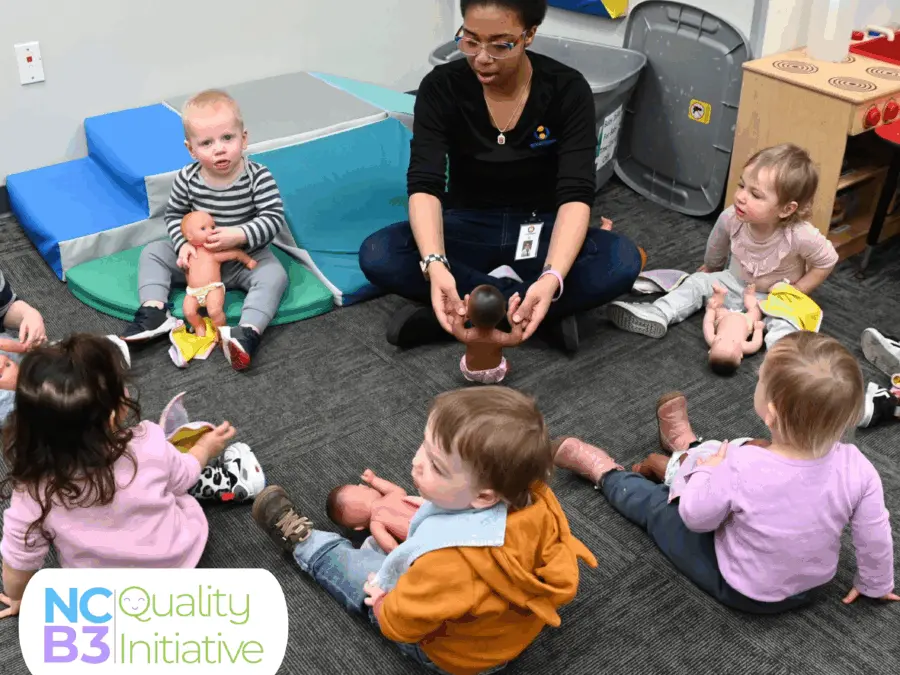
This past fall, Birth-to-Three Quality Initiative (B-3QI) coaches were all trained in Baby Doll Circle Time. Created by Dr. Becky Bailey with Elizabeth Monero-Cefalois, Baby Doll Circle Time is not what we typically think of when we hear the words “circle time” used in reference to early childhood classrooms. This particular practice does not involve reviewing calendar concepts, shapes or colors. Baby Doll Circle Time has “lessons” that are comprised of 5 consistent steps:
- Transition to getting your baby
- Beginning awareness
- Connection
- Cuddling and soothing
- Ending and transition to the next activity
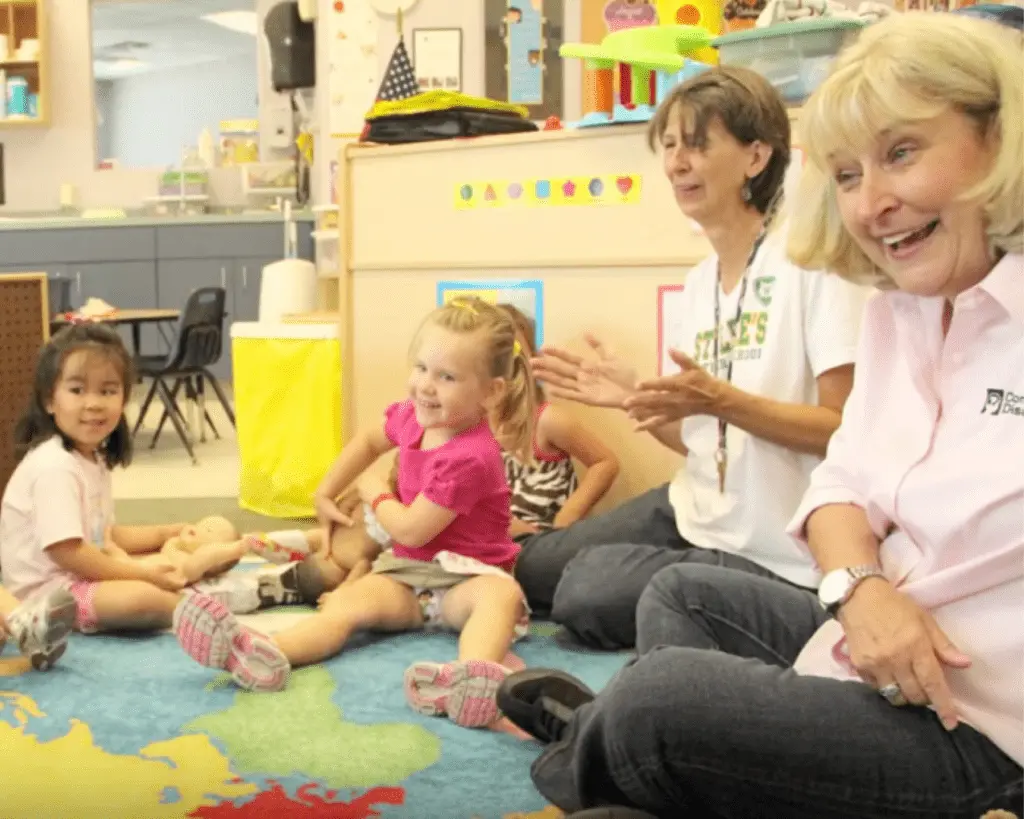
Baby Doll Circle Time is a way to strengthen attachment, attunement and social play. The first three years of life are the most important in terms of brain and physical development. These are the formative years where we understand big concepts about relationships with others and who we are as individuals. During this time, the foundation is laid for both the ability to attend and motivate ourselves and how we self-regulate and manage stress (Bailey, page 5). Promoting healthy development requires positive, joyful, social play between the child and adult(s) in their life, which is part of what makes Baby Doll Circle Time so impactful and important.
The keys to doing Baby Doll Circle Time effectively are knowledge of the content within the “lesson,” a focus on the intent of the lesson and the connection with each child within the activity. Baby Doll Circle Time can be done one-on-one or in small and large groups based upon the interest of the child(ren). Relationship-building is the main goal, which makes it essential to reflect on how the activity is accomplishing that task. This is done by focusing on what the child is doing, noticing and stating what is observed as happening (Bailey, page 26).
Baby Doll Circle Time “helps to reduce the stress of out-of-home care by creating healthy attachments and improving the quality of caregiver/child relationships. It uses attachment, attunement and social play to wire the brain for optimal development by increasing the positive affect and joy between the caregiver and the child” (Bailey, page 19). Having the ability to self-regulate means being able to organize and respond to our emotions, thoughts and behaviors, which is necessary for success in life.
If you would like to learn more about Baby Doll Circle Time and how it might support the children in your care, click here to contact your regional Birth-to-Three specialist.