
Blog

By Jennifer Anderson, Birth-to-Three Professional Development Manager
What is play?
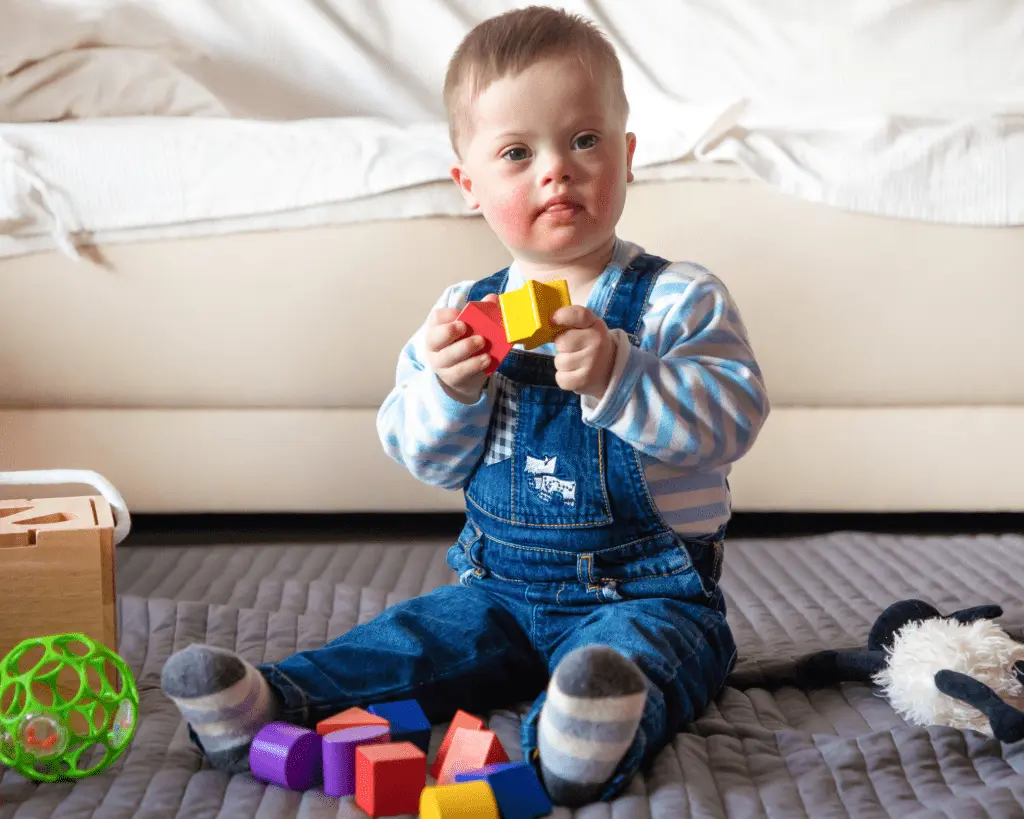
Play is critical to the development of a young child. Play starts at birth with the teachers’ intentional support. Long before they develop the ability to use language to ask questions about the world around them, young children investigate it using their senses. They look, hear, taste, smell, touch, and move, exploring and discovering at their own pace to expand what they know and understand. Play supports children’s skills across all developmental domains. Play builds skills they’ll use throughout their lives, such as solving problems, interacting and negotiating with others, processing emotions, taking risks, and fostering flexibility, resilience, and self-direction. Play motivates children to build and test their growing competence in engaging positively with people, mastering physical and intellectual tasks, and acting out the stories created by their imaginations. To fully experience the benefits of play and interaction with others, they depend on you to do several things: provide a sense of safety and security, offer just the right kind and amount of stimulation and support at the right times, be relaxed and playful, and meet their individual needs.
As a teacher, what is my role?
Your knowledge, experience, and relationships with the children will guide you to provide just enough novelty and just enough challenge to stimulate but not overwhelm them. Children are learning by making their own choices from carefully selected toys and materials and exploring them under the watchful eye of an adult who knows them well. Many toys for very young children have flashing lights and sounds. Be aware that these toys can be overstimulating. Having face-to-face interactions with others is more effective for meeting developmental milestones compared to using electronic devices like videos, cell phones, etc. (Rayce, Okholm & Flensborg-Madsen, 2024). By describing the ongoing action, asking open-ended questions, coaching interactions, and providing materials when a child needs them, you expand the learning possibilities of any play scenario.
Strategies to be a playful teacher.
By being down on the child’s level, you are able to notice and enjoy the same things that the child is noticing and enjoying. Maintaining your sense of humor and perspective about the small stuff can lighten the burden and help set a positive tone for whatever comes. Creating a song or ritual promoted by a child’s new skill or discovery shows him that you notice and value his efforts and interests. Showing your pleasure and voicing your thoughts reminds a toddler that you are a very real person who is also a playful, engaged partner.
Here is a chart of different types of play that children engage in and how you can play a supportive role as children learn:
| Type of play | What is it? | Examples |
| Interpersonal play | Social and emotional exchanges between others are a basic form of play | Peekaboo, cooing back and forth |
| Exploratory/sensorimotor play | Children explore objects to understand what they are and what can be done them | Shaking, mouthing, throwing |
| Relational play | Children explore how objects can be combined in play, often imitating the use of the object they have observed | Talking on phone, pouring juice in dramatic play |
| Constructive play | Stacking blocks, problem-solving | Stacking blocks, problem solving |
| Symbolic play | This type of play involves using one object as another object; idea or action | Taking on roles in dramatic play, using a block as a phone |
| Rough and tumble play | This play occurs at all ages and is characterized by engaging in playful physical actions | Crawling over another infant, tug of war with same toy |
Luckenbill et al. (2019, pp. 8–9)
This is a critical time for young children to begin their learning journey. As one of their earliest teachers, you play a vital role in helping to build that foundation. Intentional interactions with the children in your care are invaluable. Enjoy playing together!
Luckenbill, J., Subramaniam, A., & Thompson, J. (2019). This is play: Environments and Interactions That Engage Infants and Toddlers. National Association for the Education of Young Children.
Rayce, S.B., Okholm, G.T. & Flensborg-Madsen, T. (2024). Mobile device screen time is associated with poorer language development among toddlers: results from a large-scale survey. BMC Public Health 24, 1050. https://doi.org/10.1186/s12889-024-18447-4