Blog
As the President ofEarly Years, a mother and a grandmother, I have beenfollowing the advancement of HB 485, the Virtual Early Learning Pilot program, underconsideration by the North Carolina State Legislature. The 3-year pilot wouldallow up to 10 school districts to offer online pre-k to at-risk, 4 year-oldchildren, at a cost of $500,000 per year for the next three years.
I know that every year,state legislators are forced to make difficult decisions in allocating statefunding. I can imagine that there is great pressure with these decisions andthat legislators look for ways to save money, while still achieving intendedoutcomes. With regard to state pre-k funding and the goal to have all childrenthroughout North Carolina enter school with the skills to succeed, it isimportant for legislators to understand how young children learn and whatschool readiness really means.

Decades of research show that the greatest gains made by children in pre-k occur where teacher interactions with children promote critical thinking skills as well as concept knowledge through warm and responsive relationships.[1] This isn’t by chance. It’s by design. It’s in-person. It’s individualized to meet each child where he or she is at to build on strengths and build up areas that are not as strong.
Numerous evaluationshave shown the importance of “instructional, social, and emotional serve-and-returninteractions that occur daily between teachers and children, as well as amongclassmates”[2] that result indevelopmental gains across early childhood domains (e.g., social and emotional,language and literacy, critical thinking and physical development). Theseinteractions “motivate and deepenlearning, enable children to organize and focus their attention and othercapacities needed to learn, and promote peer cooperation and support,”[3]which comprise the foundation for school readiness. It’s about soft-skilldevelopment as well as concept development related to letters and numbers.
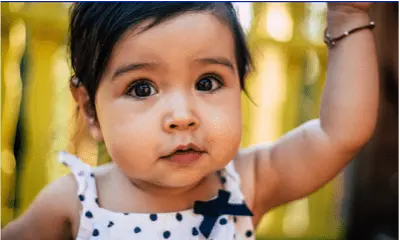
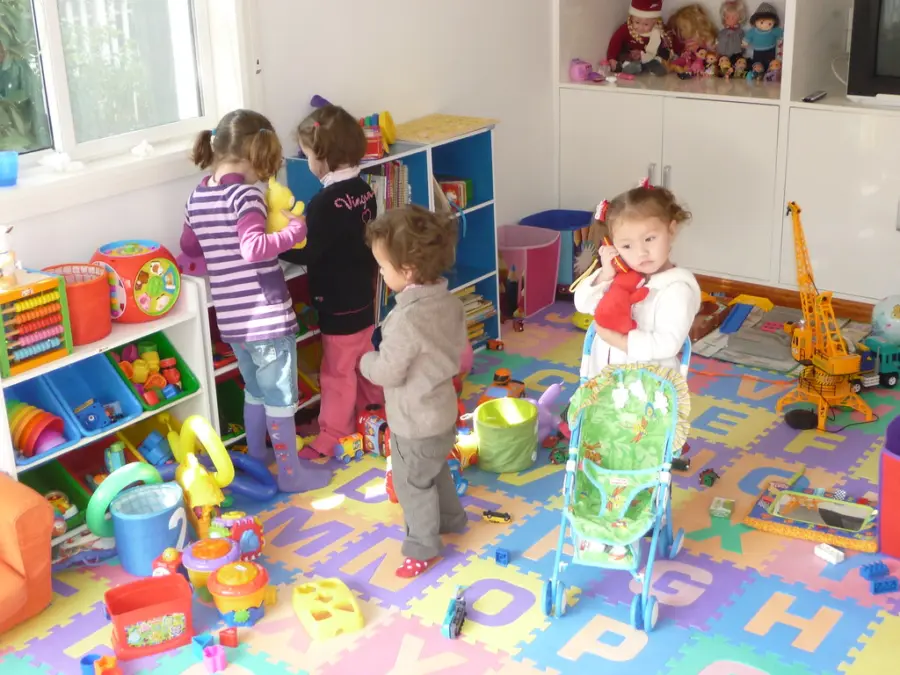
In my career, I’ve hadthe opportunity to visit pre-k classrooms and talk to pre-k teachers. Too manyof our at-risk 4 year-olds haven’t been read to; they don’t know that bookscontain words and pictures that tell a story, that letters have sounds and thatstories have a sequence – a beginning, a middle and an end. Some have neverheld a pencil or colored with crayons or written their name. Some haven’t helda pair of scissors or developed the dexterity to use a pencil or have ever puttogether a puzzle. You would think by age 4, children would know colors andbasic shapes, but some do not.
The same children might know how to watch a videoon a parent’s phone, but they can’t wait their turn or share, they can’ttransition between activities and they don’t know how to use their words toexpress their thoughts or feelings in a group setting – to lead, follow or justget along with peers. They may or may not have consistent rules at home so theydon’t know how to manage themselves appropriately and follow rules in aclassroom. These are soft-skills that are learned in a hands-on experience thatcan’t be learned through a computer lesson.
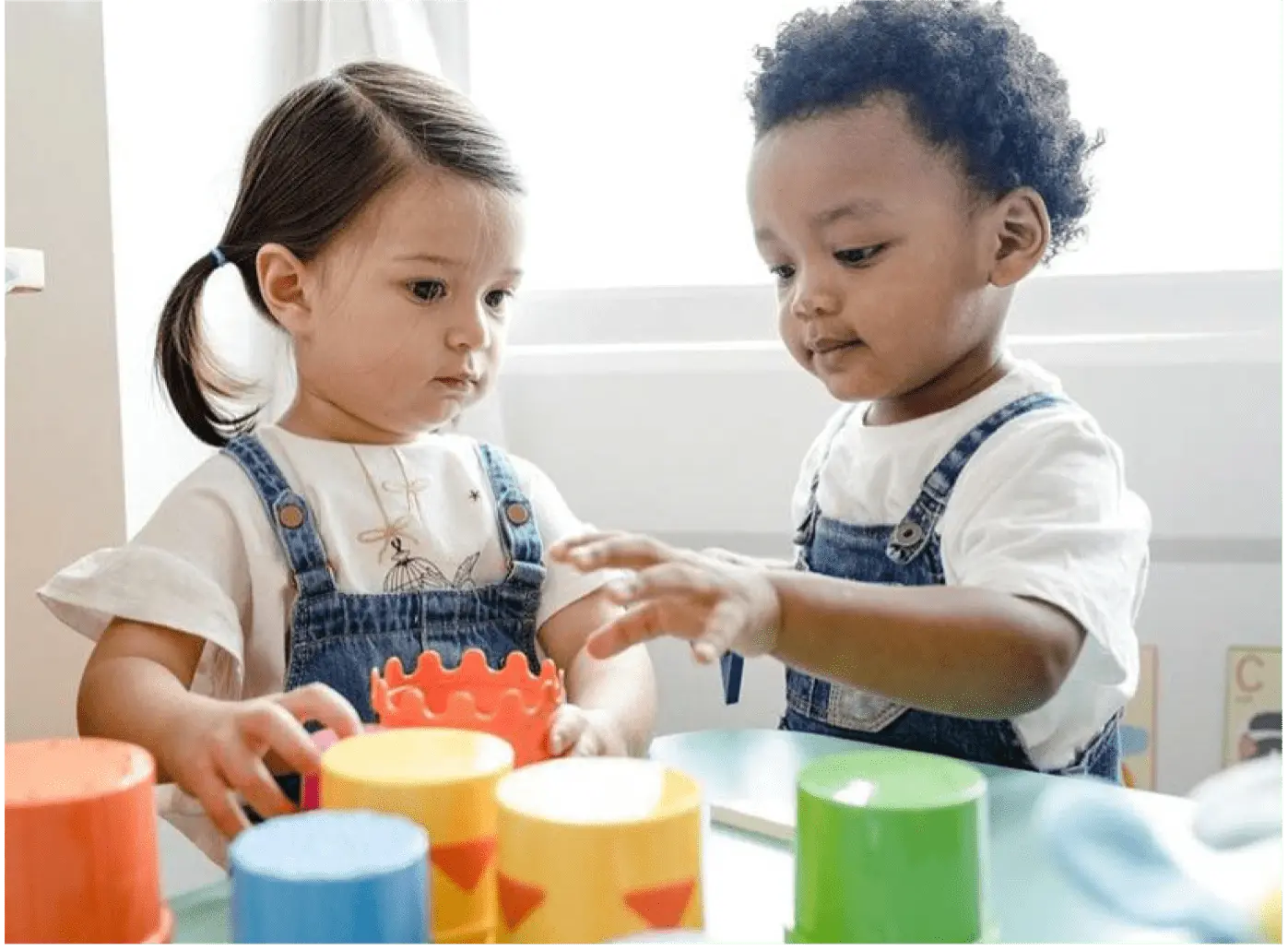
Pre-kprograms also screen children for vision, hearing, speech and physicaldevelopment and help identify children who could benefit from earlyintervention services in areas where there may be a delay. None of this canoccur through an online preschool experience – at least not in an effectivemanner.
The NC Pre-K programworks. Studies have found that NC Pre-K raises children’s literacy, math andsocial-emotional skills not just for kindergarten entry[4]but also throughout elementary school and the most recent research shows gainsthrough middle school.[5]
When kindergartenteachers are asked what school readiness means and what skills are mostimportant for school readiness, their top responses include: children who canregulate their impulses, pay attention, listen to and follow directions, bewilling to try different tasks (e.g., have self-confidence), engage in self-care,get along with peers and have motor skills such as the ability to hold apencil.[6]
Despite the strongevaluations of NC Pre-K, current funding supports fewer than half of eligiblechildren. To me, the answer should be to adequately fund NC Pre-K so that 4year-old children can attend, not divert resources to an online preschool thatmisses the mark on what matters most for early childhood development –effective interactions with children. Not screen time.
There is still time to course correct on state budget issues. We don’t need a 3-year pilot that diverts $1.5 million from additional pre-k seats for children. Let’s put every dollar possible into expanding what works. And, for 4-year old children, that’s a setting that promotes interactions with teachers and peers.
[1] Investing in Our Future: The Evidence Base onPreschool Education, Society for Research in Child Development and Foundationfor Child Development, 2013. https://www.fcd-us.org/assets/2013/10/Evidence20Base20on20Preschool20Education20FINAL.pdf
[2] The Current State of Scientific Knowledge on Pre-Kindergarten Effects, Deborah A. Phillips of Georgetown University, Mark W. Lipsey of Vanderbilt University, Kenneth A. Dodge of Duke University, Ron Haskins of the Brookings Institution, Daphna Bassok of the University of Virginia, Margaret R. Burchinal of the University of North Carolina at Chapel Hill, Greg J. Duncan of the University of California-Irvine, Mark Dynarski of the Brookings Institution, Katherine A. Magnuson of the University of Wisconsin-Madison, and Christina Weiland of the University of Michigan. (2017). https://www.brookings.edu/wp-content/uploads/2017/04/duke_prekstudy_final_4-4-17_hires.pdf
[3] Ibid.
[4] North Carolina Pre-Kindergarten Program Evaluation KeyFindings (2002–2016), Frank Porter Graham Institute, University of NorthCarolina, 2017. https://fpg.unc.edu/sites/fpg.unc.edu/files/resources/reports-and-policy-briefs/Summary%20of%20NC%20Pre-K%20Evaluation%20Findings%205-2017.pdf
[5] Evaluation of North Carolina’s Smart Start and NCPre-K Programs: Follow-Up Through Eighth Grade, Duke University, December 2018.https://duke.app.box.com/s/pw3zv27a2jkmfas2j183yg4ekamxzl8y
[6] What Kindergarten Readiness Means to Kindergarten Teachers,New America. 2009. https://www.newamerica.org/education-policy/early-elementary-education-policy/early-ed-watch/what-kindergarten-readiness-means-to-kindergarten-teachers/