Blog
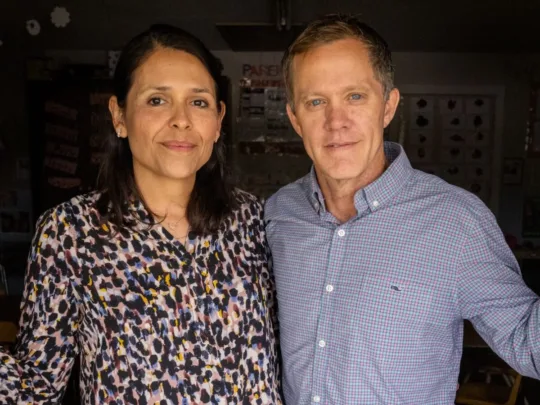
In our employee spotlight series, we highlight some of the wonderful people who make Early Years a success. Meet Edith Locke, Senior Vice President of Professional Development Initiatives and learn about her perspective of Early Years and how it has changed over the years.
As we celebrate our 50th year, learn about the profound impact of our staff’s commitment to Early Years and everyone we serve.
How long have you worked at Early Years?
I’ve had the good fortune of being with Early Years for more than thirty years! I joined Early Years in March 1993, in the role of a TEACH Scholarship Counselor. My onboarding with Early Years occurred just as the TEACH Early Childhood® Scholarship Program was transitioning from a small two-county pilot to a statewide initiative.
What do you recall about the early days?
I still have vivid memories of the early days when Early Years’ first office was located in Carrboro above the Employment Security Commission, at a time when the organization was a significantly smaller agency than it is today. Some of the organization’s long-term veterans were hired within weeks of one another. So we were able to bond with each other and our camaraderie ultimately influenced much of Early Years’ culture. Looking back on those early days, there was such a feeling of esprit de corps across the agency because we were collectively engaged in cutting-edge work.
How has your job changed over the years?
Throughout my tenure with Early Years, I have been blessed to experience upward mobility. As I mentioned earlier, I joined the organization as one of the first TEACH scholarship counselors and gradually moved out of that role to serve as the program’s statewide outreach coordinator and ultimately went on to be promoted to the position of program director. But the interesting thing that happened for me though was that as I was experiencing upward mobility associated with TEACH North Carolina, the program was also gaining its national presence. Sue Russell, who was Early Years’ president at that time, was also leading the national effort and began engaging me in national-level conversations, thus allowing me to work directly with administrative teams in other states. Fast forward to today, I now serve as the senior vice president for professional development Initiatives, a leadership role that encompasses the TEACH NC Scholarship Program and the National Center.
What has been your biggest achievement/success and Early Years’ greatest accomplishments?
My biggest achievement to date has been related to being able to retain many long-term committed, high-performing staff who have been equally instrumental in the success of TEACH and the National Center. None of my achievements occurred in a vacuum. So as a team, we own the success of the program – including its national expansion.
Early Years has garnered respect statewide and nationally for its innovative ECE Workforce Initiatives.
What would you consider to be the biggest change in Early Years over the years?
Early Years has become much more structured over the course of its history. The agency’s growth has been phenomenal so much so that it outgrew its very humble beginnings from that little office space in Carrboro to now having multiple offices. Early Years’ leadership restructuring also clearly defined divisions within the agency which has brought more visibility and funding opportunities for many of the organization’s programs and services.
What’s your favorite part of the job? What excites you most?
Part of my role on the national level involves providing programmatic technical assistance and support to our state partners. I’m still excited about that because, at my core, I like helping people. I love problem-solving, and I love brainstorming solutions. Similarly, I’m equally excited when a non-TEACH state reaches out to me seeking guidance or asking for help when trying to figure out how to replicate TEACH Those two things aside, what really excites me is when I get a random inquiry from a teacher in North Carolina asking “how do I get enrolled in school? How do I access the scholarship?” This opportunity for engagement takes me back to my original roots at Early Years as a scholarship counselor and is extremely reaffirming that Early Years is making a difference.
What is your biggest hope for the next decade? In what ways do you expect to grow?
That’s an interesting question given where our state is currently in determining its priorities for early care and education. North Carolina used to be at the cutting edge of everything early care and education related, due in part to Early Years’s innovations and leadership. Now, I fear that we’re losing ground. There are so many discussions currently happening that indicate regression for NC’s ECE workforce is on the horizon.
To the extent the NC values and invests in sustaining a highly-qualified, well-compensated workforce, Early Years will always be at the forefront of that movement. My greatest hope for the next decade is for Early Years to really rise in national prominence. That being said, I would love for Early Years to become a household name in North Carolina in particular. I want the organization to advance in terms of our use of technology and fully embrace the digital era.
What is your biggest hope for the next decade? In what ways do you expect to Describe what Early Years means to you, on a personal level, in 15 words or less.grow?
Early Years is my extended family.
“I don’t want to ever stop learning and growing. That“My biggest achievement to date has been related to being able to retain many long-term committed, high-performing staff who have been equally instrumental in the success of TEACH and the National Center. None of my achievements occurred in a vacuum. So as a team, we own the success of the program – including its national expansion.”
is important to me and something that was always instilled in me by my parents. I don’t want to ever rest on my laurels and feel like there’s nothing more to learn.”
-Edith Locke
SVP, Professional Development Initiatives