Blog

Beyond the data, our dedicated team of researchers ensured that the Working in Early Care and Education in North Carolina: 2023 Workforce Study painted a clear picture of the realities of those working on the front lines of child care across North Carolina.
Through surveys, interviews, and focus groups, they’ve captured the experiences and perspectives of a workforce that is vital to the well-being of our children and communities.
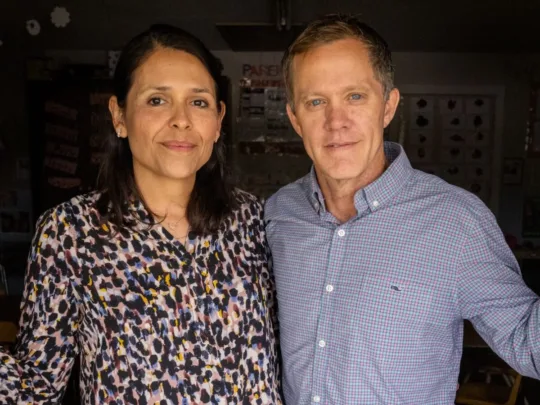
The 2023 Workforce Study was led by Frédérique Yova, Ph.D., our Senior Research Manager, and Mary Martin, Vice President Systems Research and Development. We’ve asked Frédérique and Mary to share a little bit about their experiences in the process of conducting this study, and what they hope people take away from it.

Frédérique has been in the field of early childhood education for more than 10 years. She shifted careers due to her deep interest around this topic and joined Early Years, formerly known as Child Care Services Association (CCSA), in 2022.
“My heart is very anchored into these early years,” she said.
Mary started her career in social work but as she learned more about early childhood education as a way to level the playing field for minority groups, she felt a call to help move the field forward. She has worked at Early Years since 1994 in a variety of roles.
“For me, it’s really just about social justice and about really trying to help out those folks who traditionally are overlooked and marginalized, trying to make life better for them, and helping them to have a good start,” Mary said.
Early Years has conducted statewide surveys of the early care and education workforce in North Carolina for more than 30 years. Our longstanding leadership with these surveys allows communities across the state to understand the current landscape of child care, as well as trends over time.
“We’ve always started with the survey that we used before, and then modified it based on whatever was going on. So, this time, we added a bunch of COVID-19 questions. One of the other changes that we made this time was we changed the way we were asking about gender to better reflect how the world is viewing gender,” Mary said.
“…We always have the same core questions we ask about education, compensation, and experience because those are important things in the field. But we modify some of the questions based on the time and what’s going on in the world.”
Frédérique noted that there was no typical day while conducting the study because her team was involved in every step of the process, from crafting the study questions to developing the research plan to ensuring representative samples from across the full state to leading interviews and focus groups.
“And this was just for data collection! Then you add on the data analysis for both the quantitative and qualitative,” Frédérique said. “It was just a very busy time.”

“It sounds like it’s really easy, you know. You just send surveys, and when they come back, you log them in…But it’s a lot more complicated than that,” Mary added.
“For one, being a statewide study and having to make sure that we get response rates in every county. We really had to focus more on some counties than on other counties. And also, because there is no list of child care teachers. We couldn’t just send surveys directly to teachers because we don’t know who they are. So, we had to go through programs to get to teachers.”
This combination called for a very concerted effort on the part of Early Years to ensure a good response rate from teachers and providers across the full state. Frédérique and Mary said that their process included checking every day to see where they were with responses and getting creative with the different types of follow up needed.
“It’s amazing to me that we get the response rates we do,” Mary said.
“And I think that really speaks to the commitment in the field. You know, the teachers and directors and teacher assistants, family childcare providers, they really care. They took the time and put the effort into filling out the surveys for us, as well as coming to the focus groups and interviews. They cared. They wanted folks to know what their experiences were like. And so, we were able to capture that.”
Now that the 2023 Workforce Study is out in the world, Frédérique and Mary hope people will read it and gain a real understanding of the importance of early care and education. They both shared that they want to see the study lead to increased support for the child care workers.
“I hope that they will understand the importance of early care and education, understand that it is not just taking care of kids, but that it’s actually educating young children, and that it’s allowing their parents to work and focus on work when they’re at work,” Mary said.
“And I hope that policymakers will see the tremendous growth in the field since the 1990s. We’ve made tremendous gains but it’s still not where it needs to be. I hope they will continue to provide funding and policies that will help grow the field as opposed to taking us back to the last century.”
Read the full 2023 Workforce Study or explore your county’s specific report. You can also learn more about the study from Frédérique, Mary, or another member of the Early Years team by requesting a speaker for your event or meeting through our online form.