
Blog
Blog
Working Parents with Infants and Toddlers: New Vision Needed to Access High-Quality Child Care
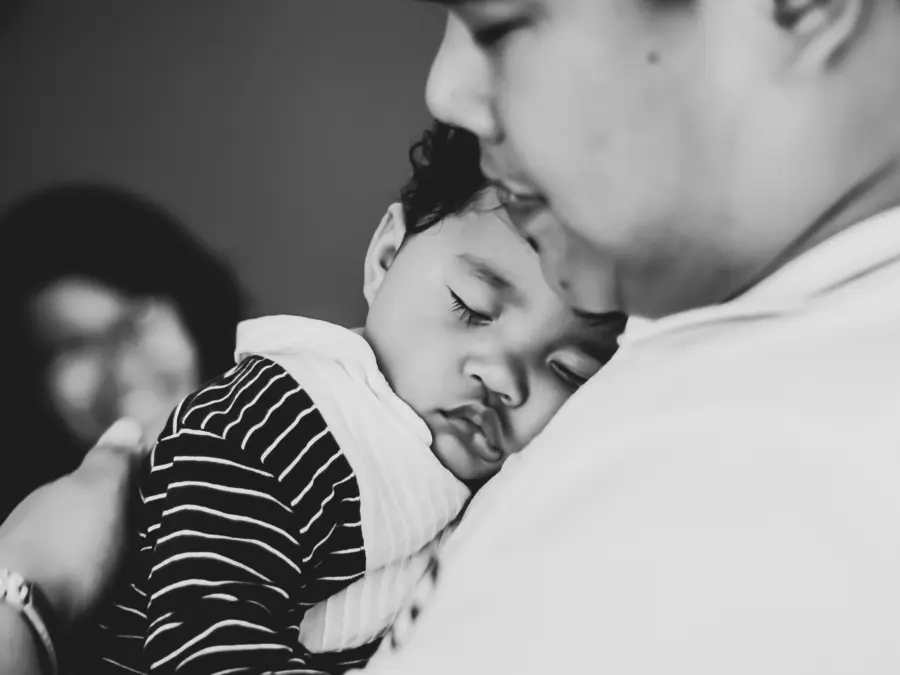
During a child’s earliest years, brain development occurs that sets the architecture for all future learning (e.g., the wiring needed for healthy child development across social, emotional, physical, and cognitive areas).[1] This is what makes high-quality child care for infants and toddlers so important.
At the same time, infant and toddler care is the hardest to find. The supply of infant and toddler care pales in comparison to the needs of working parents. A report by the Center for American Progress found that 44 percent of families in North Carolina live in a child care desert where the demand for child care by working families far exceeds the supply.[2]
Even when families can find it, too many struggle with the cost, particularly for infants and toddlers. Throughout North Carolina, the average annual price of child care for an infant in a child care center is $9,254.[3] The average annual price of child care for an infant in a family child care home is $7,412.[4]

Forperspective, for a single mother earning minimum wage ($7.25 per hour) workingfull-time, she would earn $15,080 per year. The cost of center-based infantcare would be 61.4 percent of her income. The cost of infant care in a familychild care home would be 49.2 percent of her income. If she earns twice theminimum wage ($14.50 per hour), about $30,160 per year – the cost ofchild care in a center would be 30.7 percent of her income. The cost of infantcare in a family child care home would be 24.6 percent of her income. If she earnsthree times the minimum wage ($21.75 per hour), her annual income wouldbe about $45,240 per year. Center-based infant care would cost 20.5 percent ofher income; infant care in a family child care home would cost 16.4 percent ofher income.
To help families with the cost of child care, the North Carolina Division of Child Development and Early Education (DCDEE) offers qualifying families a subsidy.[5] The state pays most of the cost and families have a 10 percent co-pay. Unfortunately, not all families who qualify can receive assistance and more than 30,000 eligible children throughout the state are on a waiting list for child care financial help.[6] It is important to note that the waiting list is only a snapshot in time because some families don’t join the list when they hear about the length of it. So, the waiting list reflects only those who qualify for help and who also add their names to the waiting list in case more funding becomes available to support additional families.
For families with infantsand toddlers, the supply and cost are both struggles. It’s unrealistic to thinkthat families can access the licensed market if they have to pay a hugepercentage of their income to cover the cost. Why is that a concern to allNorth Carolina taxpayers? There are several reasons.

- Quality of child care and long-term taxpayer bills. When parents can’t afford the licensed market, if they must stay in the workforce to make ends meet, then they will try to make do with a variety of unlicensed care options. Given the brain development that is underway during a child’s earliest years, it is critical that a child be in a setting that promotes his or her healthy development. That’s one of the reasons for the rated child care license[7] in North Carolina and one of the reasons the NC General Assembly restricted the receipt of child care subsidies to programs with at least a 3-star rating. Supporting healthy child development is important, particularly for infants and toddlers when the brain is developing the fastest. Taxpayers will pay more in the long-term when a child enters kindergarten without the skills to succeed through additional costs for remediation, for special education, and for those children who must repeat a grade (e.g., repeating a grade is not “free”).
- Labor force participation. Without affordable child care, parents reduce their hours or opt-out of the workforce. Ninety-four percent of workers involuntarily working part-time due to child care problems are women.[8] In North Carolina, 457,706 children under age 6 have working parents.[9] If one-third to one-half of these children under 6 are infants and toddlers, that’s 151,043 to 228,853 children who may need some type of child care while their parents work.
- Employers & Employees. Employers depend on working parents. And, working parents with young children depend on some type of child care.
As the General Assembly meets todiscuss budget priorities, child care assistance should be at the top of thelist. Given the extraordinary cost of child care for infants and toddlers, theGeneral Assembly may want to consider reviewing other models to support accessto high-quality infant and toddler care.
In June 2018, the District of Columbia City Council unanimously passed the Birth to Three for All DC Act.[10] The legislation charts the path for a comprehensive system of supports for children’s healthy growth and development with a specific focus on services for families with infants and toddlers. The Act is broad — investing in home visiting and child developmental screening, however, with regard to child care for infants and toddlers, the Act expands child care subsidy eligibility for infants and toddlers to all families by 2027, caps the percentage of annual income a family would pay toward child care expenses at 10 percent of gross income by 2028, and phases in competitive compensation for early educators. The District is now in its second year of implementation with $16 million in funding for FY2020.[11] City Council members say it’s a high priority to increase funding as part of the 2021 budget, and work on that front is underway.[12]
There are certainly differencesin passing legislation that supports a city (even a large city like Washington,D.C.) compared to a state. However, the concept is innovative. It recognizesthat the cost of infant and toddler care is so high that all families maystruggle with the cost. It recognizes that access to high-quality infant andtoddler care is important to a child’s healthy development. And, it recognizesthat a compensation strategy for the child care workforce is needed to supporthigh-quality programs.
It is time to rethink the state’sapproach to child care subsidy, and especially how families with infants andtoddlers are supported in accessing high-quality child care. In the new year,let’s give thanks for what we have and think through policies that can bestsupport our children in the future.
[1] Harvard University Center on the Developing Child, Brain Architecture.
[2] Center for American Progress, America’s Child Care Deserts in 2018.
[3] Child Care Aware of America, The US and the High Price of Child Care: 2019.
[4] Ibid.
[5] NC Division of Child Development & Early Education: Subsidy Services.
[6] North Carolina Center for Public Policy Research, June 7, 2019.
[7] NC Division of Child Development & Early Education: Star Rated License.
[8] Committee for Economic Development, Child Care in State Economies: 2019 Update.
[11] Significant Birth to Three Funding Passes in the DC Council, May 28, 2019.
[12] D.C. reaped benefits of expanded preschool. Now we must focus on even younger children.